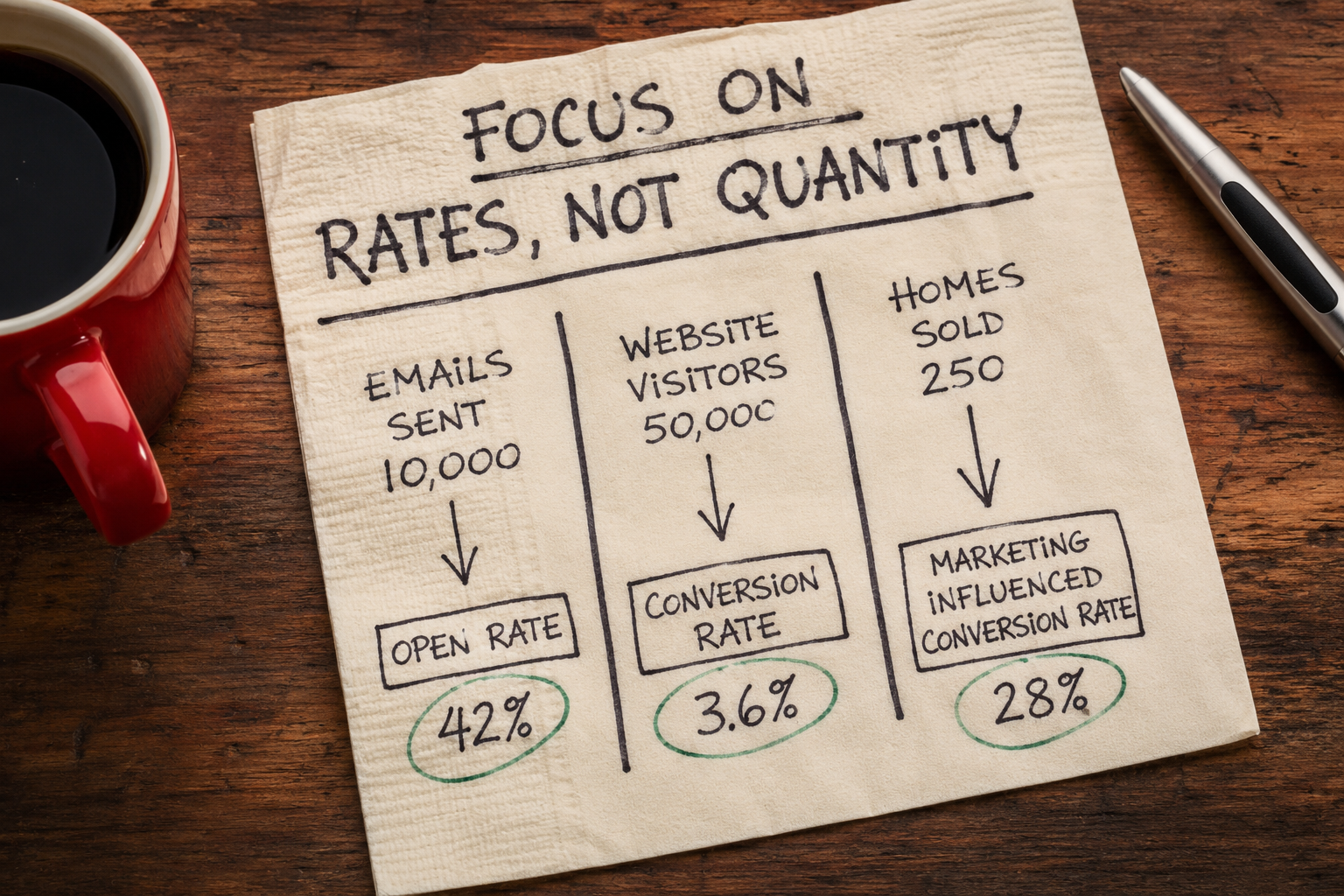

Most MPC marketing reports open the same way. Leads are up this month. Or leads are down, and everyone scrambles.
I built those reports for years. Leads were easy to count and easy to celebrate. But ownership never really asked how many leads we got. They asked whether marketing was selling homes.
Leads measure interest. Sales measure results. Most developers are still keeping score with the first one.
How lead counts mislead you
Here's a simple example. Two channels, same budget, one quarter.
| Channel A | Channel B | |
|---|---|---|
| Spend | $20,000 | $20,000 |
| Leads | 400 | 60 |
| Homes sold | 4 | 6 |
| Cost per lead | $50 | $333 |
| Cost per sale | $5,000 | $3,333 |
Judged by leads, Channel A is the clear winner. It's cheaper per lead and fills the database. Judged by sales, Channel B wins, and it isn't close.
If you set next year's budget by lead volume, you move money toward the channel that sells fewer homes. It happens in communities every year, and nobody notices because the lead report looks great.
Why most developers can't see this
The problem isn't effort. It's where the data lives.
Marketing sees the lead. The builder sees the contract and the closing. Those two facts sit in different systems, often in spreadsheets that never meet. So the developer's marketing team reports what it can see, which is leads.
That gap is why so many marketing directors walk into budget meetings defending lead counts instead of showing homes sold.
How HubSpot closes the gap
When builder sales data comes back into HubSpot, everything changes. Each sale gets matched to the buyer's contact record, and that record already knows how the buyer found you and what they engaged with along the way.
Now you can report:
- Homes sold by lead source, not just leads by lead source
- Cost per sale by channel, so budget follows results
- Time from first touch to contract, so you know how long each channel takes to pay off
- Realtor-driven sales, so you can see which broker relationships actually produce
This is also where the builder partnership pays off. When you're handing builders engaged buyers with context, they're far more willing to share what happened after the handoff.
Where to start
- Ask each builder for a regular sales report. Buyer name, email, contract date and closing date is enough to start.
- Match those sales to your HubSpot contacts. Even a manual match once a month tells you more than a year of lead reports.
- Add one line to your monthly report: homes sold by lead source. Watch how the conversation with ownership changes.
- Before 2027 budgets lock, compare cost per sale, not cost per lead. Then move money accordingly.
Lead volume isn't useless. It tells you whether people are interested. But it's the wrong scoreboard for deciding where your budget goes.
What does your monthly marketing report lead with today? I'd like to hear how other teams measure it. Reach out anytime.